
SBEM Calculations
compliance on non-domestic building projects.
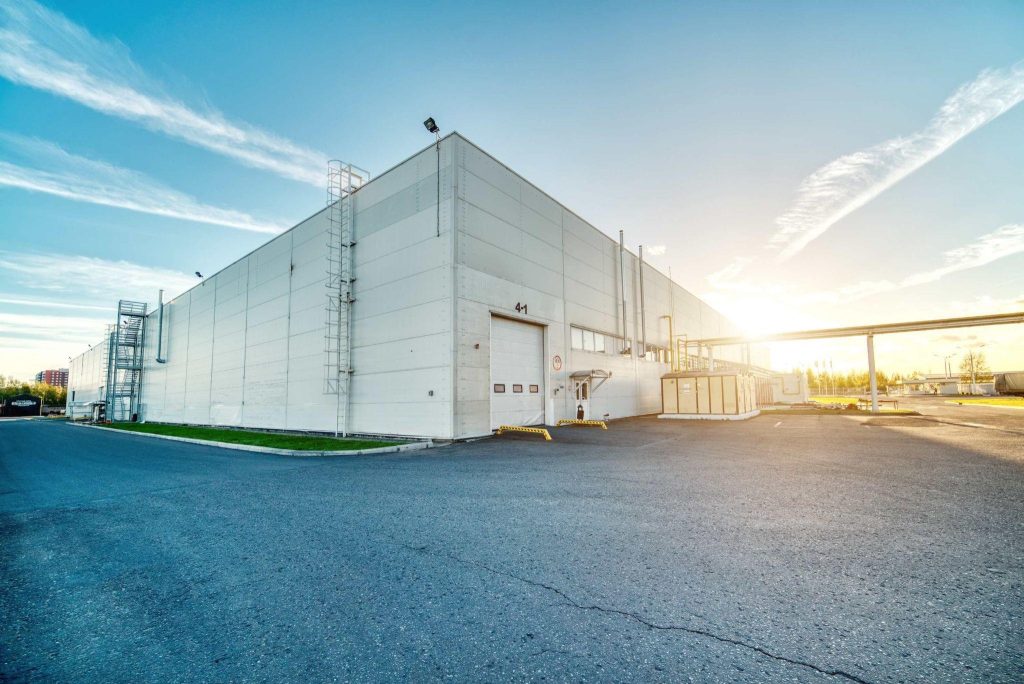
JosTec provides professional SBEM calculations to support Building Regulations Part L compliance for commercial and non-domestic buildings.
From new-build commercial developments to existing non-domestic properties being sold, let or refurbished, our experienced energy assessors provide clear advice, accurate calculations and compliant reporting to help satisfy Building Control requirements and keep your project moving.
Key Takeaways
- An SBEM calculation is an energy assessment used for commercial and non-domestic buildings.
- SBEM calculations help demonstrate whether a building meets Building Regulations Part L requirements for energy performance and carbon emissions
- An SBEM assessment considers factors such as building fabric, heating, ventilation, hot water, lighting, air tightness and renewable energy systems
- All new-build non-domestic properties require SBEM calculations to produce BRUKL reports for Building Control, with the final assessment data used to generate the commercial EPC
- Existing non-domestic properties may require an SBEM assessment when a commercial EPC is needed for sale or letting, or when major works require Part L compliance to be demonstrated
- SBEM calculations are usually completed at design stage (pre-construction) and as-built stage (post-construction)
What is an SBEM Calculation?
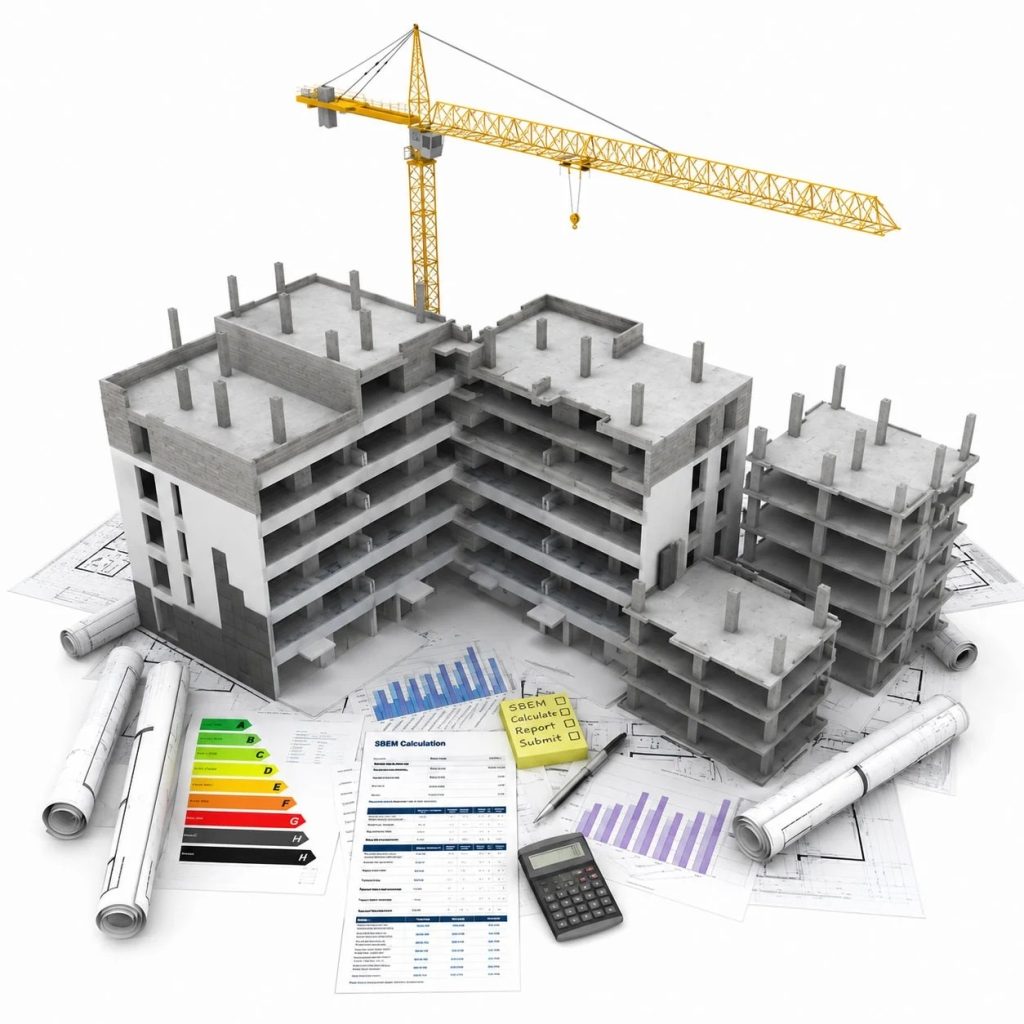
An SBEM (Simplified Building Energy Model) calculation is an energy assessment for commercial and non-domestic buildings.
It is used to predict energy use and carbon emissions of a proposed or existing non-domestic building and whether it meets Building Regulations Part L requirements.
What Does an SBEM Calculation Assess?
SBEM uses the National Calculation Methodology, known as NCM, to assess the factors that influence a building’s predicted annual energy use and carbon emissions.
An SBEM calculation typically assesses:
- Thermal efficiency and insulation levels, including U-values for walls, roofs, floors and windows
- The efficiency of heating, ventilation and hot water systems
- The air tightness of the building once constructed
- Lighting specification and controls
- Renewable energy systems, where included
Does Your Project Need an SBEM Calculation?
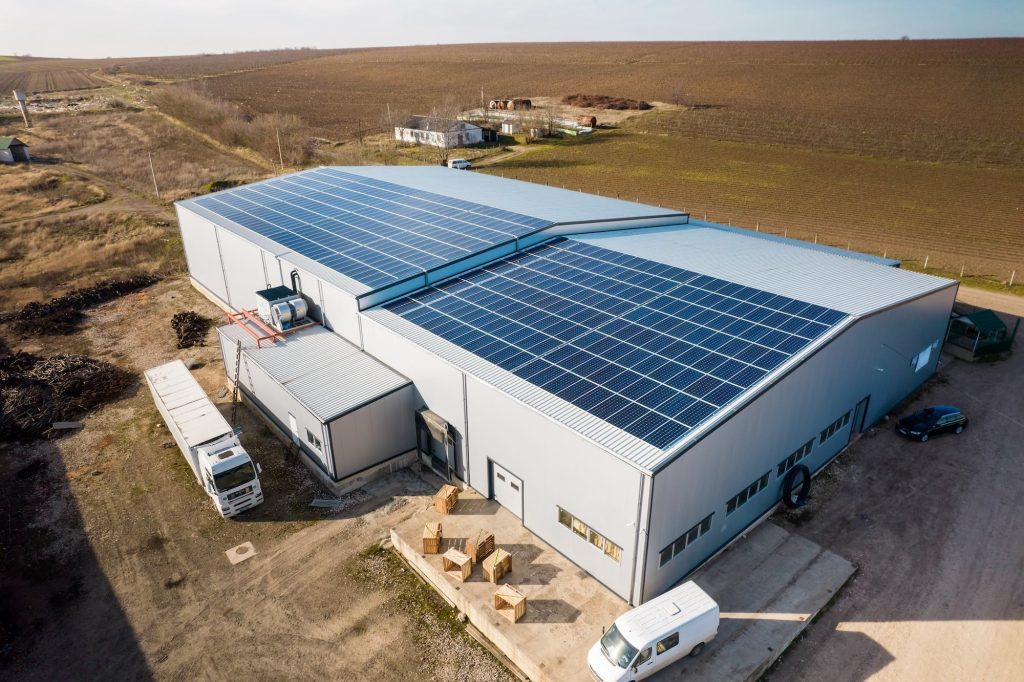
An SBEM calculation is needed for all new-build non-domestic properties. It may also be required for existing non-domestic properties when an EPC is needed for sale or letting, or when major works affect the building’s energy performance.
The assessment helps demonstrate whether the building meets the required energy performance standards and is used to produce BRUKL reports for Building Control and a commercial EPC.

SBEM Calculations for New-Builds
All new-build non-domestic properties require an SBEM calculation to demonstrate Building Regulations Part L compliance.
SBEM Calculations for Existing Buildings
Existing non-domestic buildings may require an SBEM calculation when a commercial EPC is needed, such as when the property is being sold or let.
An SBEM calculation may also be required when works to an existing non-domestic building affect its energy performance, such as a large extension, major refurbishment, change of use, or upgrades to heating, cooling, ventilation or lighting systems.
SBEM Calculations for Mixed-Use Properties
Mixed-use developments may require both SBEM calculations and SAP calculations.
The commercial and non-domestic areas of the building will usually require SBEM calculations, while the residential dwellings will usually require SAP calculations. For example, a development with retail space on the ground floor and flats above requires SBEM calculations for the retail units and SAP calculations for the flats.
When Should an SBEM Calculation be Carried Out?
SBEM calculations are usually carried out before work begins and again once construction or major works are complete.
For new-build non-domestic properties and existing non-domestic buildings undergoing major works, this two-stage process helps confirm that both the proposed design and completed building meet Building Regulations Part L requirements.
Design-stage SBEM Calculation
A design-stage SBEM calculation is completed before building work begins or while the design is being finalised.
For both new-build non-domestic properties and existing non-domestic buildings undergoing major works, the calculation checks whether the proposed building fabric, layout and services specification are likely to meet Building Regulations Part L requirements. Early SBEM input can help developers reduce the risk of late specification changes, failed compliance checks and delays to completion.
The calculation produces a design-stage BRUKL report, which can be provided to Building Control to show whether the proposed design meets the required energy performance standards.
As-built SBEM Calculation
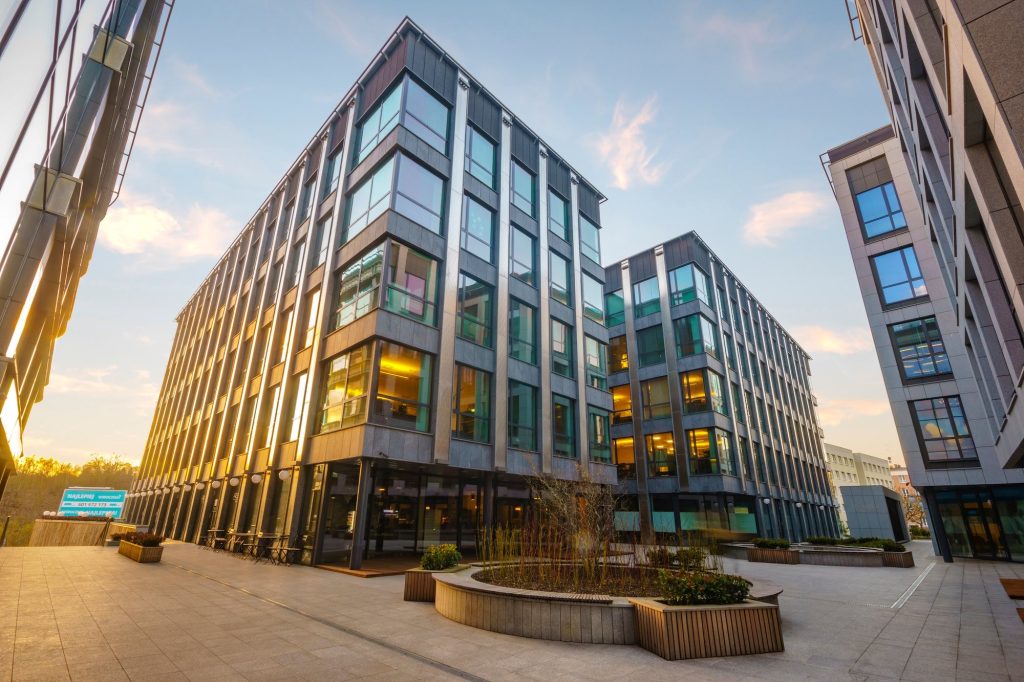
An as-built SBEM calculation is completed once construction or major works are finished and the final specification is confirmed.
For both new-build non-domestic properties and existing non-domestic buildings undergoing major works, it checks whether the completed building matches the approved design and meets the relevant Building Regulations Part L requirements.
The calculation produces an as-built BRUKL report, which can be provided to Building Control for completion sign-off. Once the as-built calculation passes the BRUKL compliance check, the same SBEM data is used to generate the building’s commercial EPC.
What Information is Needed for an SBEM Calculation?
To provide a full SBEM calculation, the following information is required:
- The building construction plans
- The types of heating that will be used
- The types of lighting that will be used
- The ventilation and air conditioning that will be used
- The use of any renewable energy sources (solar PV, wind turbines and ground/air-source heating, etc.)
The more complete the information provided is, the more efficient it is to produce an accurate assessment and identify any compliance issues early.
Why Choose JosTec for SBEM Calculations?
With extensive experience in carrying out SBEM calculations, JosTec supports developers, contractors and building owners with practical guidance, efficient assessments and clear reporting for Part L compliance.
- JosTec’s experienced team of energy assessors have carried out hundreds of SBEM calculations across a wide range of non-domestic properties
- JosTec is accredited by Elmhurst, one of the leading bodies in energy assessment
JosTec utilises the SBEM Online software to conduct assessments, ensuring calculations are accurate, up-to-date, and in line with current regulatory standards
Frequently Asked Questions
What does SBEM stand for?
SBEM stands for Simplified Building Energy Model.
It is used to assess the energy performance and carbon emissions of non-domestic buildings.
What is an SBEM calculation?
An SBEM calculation is an energy assessment for a commercial or non-domestic building.
It calculates the predicted energy use and carbon emissions of the building based on its design and construction.
Is SBEM the same as SAP?
No. SBEM is used for non-domestic buildings, while SAP is used for dwellings.
For mixed-use developments, a project may require both SBEM calculations for commercial areas and SAP calculations for residential areas.
What is a BRUKL report?
A BRUKL (Building Regulations UK Part L report) is the compliance report produced from an SBEM calculation.
It shows whether the building meets the relevant Part L energy efficiency requirements under Building Regulations
Do I need an SBEM calculation for a commercial EPC?
Yes, an SBEM assessment is commonly used to produce commercial EPCs for non-domestic buildings. New-build non-domestic properties require SBEM calculations for Part L compliance and EPC production, while existing non-domestic buildings usually require a commercial EPC when they are sold or let, unless a valid EPC or exemption applies.
Are SBEM calculations required for existing commercial buildings?
Existing commercial buildings usually need a commercial EPC when they are sold or let, which is produced from a BRUKL report following an SBEM calculation.
When should I arrange an SBEM calculation?
You should arrange an SBEM calculation as early as possible in the design process.
Early assessment helps identify compliance issues before construction starts, reducing the risk of late design changes, delays or additional costs.
What information does JosTec need for an SBEM calculation?
JosTec will typically need construction plans, building fabric details, heating specifications, lighting details, ventilation and air conditioning information, renewable energy details and air permeability information.
The exact information required will depend on the project type and stage.
Can JosTec support mixed-use developments?
Yes. JosTec can support mixed-use developments that require both cnn-domestic and residential compliance services.
This may include SBEM calculations for commercial areas, SAP calculations and EPCs for dwellings, air tightness testing, ventilation testing and other Building Regulations compliance services.
(Followed by usual sections – ‘Get Your Quote for SBEM Calculations’, Additional Services to Support Your Project)
Contact us today for SBEM calculations & EPCS
Our Energy Team at JosTec has over 20 years of experience in building compliance. We have in-house assessors, who, Over the years have encountered a wide range of challenges and adapted to numerous regulatory changes. Whatever challenges come our way, we relish the opportunity to tackle them
We will get back to you within 1 working day
Your details are kept 100% private
Need help with more than SBEM calculations & EPCS?
Explore our other services to help you navigate building regulations and achieve compliance.
Planning Services
Expert guidance and assessments for planning applications and compliance.
Design Stage Services
Comprehensive calculations and consultancy for optimal building design.
Pre-Completion Services
Professional testing and certification for building regulations compliance.